Reviewing the Little Mister New Year SVG for Embroidery
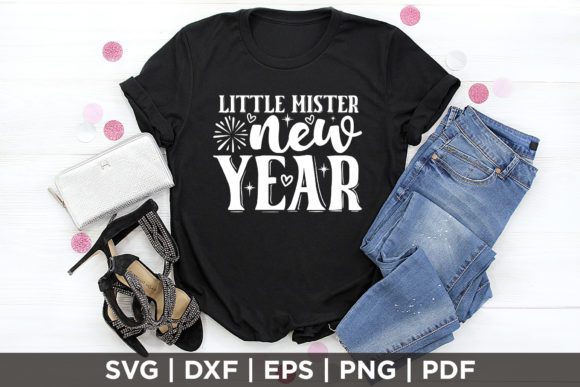
As a designer who spends half my life staring at digitized files and the other half watching needles punch through fabric, I have learned to look past the glossy preview images. When I first opened the Little Mister New Year SVG, New Year SVG, my immediate reaction was not just about the aesthetic appeal, but about its structural integrity once translated from a vector graphic into a tangible machine embroidery design. This piece falls squarely into the realm of Crafts and digital Graphics, but its true value is determined by how it performs under the presser foot.
First Impressions and Visual Personality
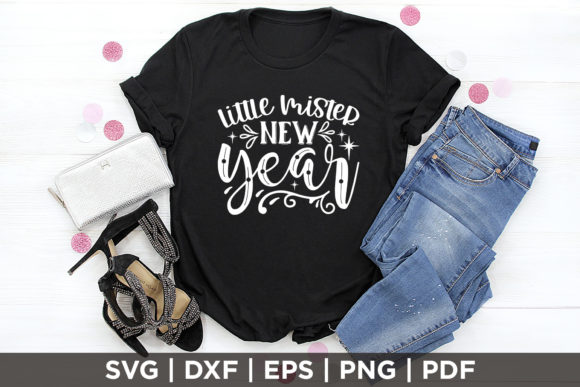
The design carries a playful yet sophisticated mood, perfectly suited for the transition into a new year. The quote included in the file is beautiful, offering a celebratory tone that feels fresh rather than cliché. What stands out initially is the clean layout. In the world of embroidery, clutter is the enemy. A design that looks busy on screen often becomes a tangled mess of thread breaks and puckering on fabric. Fortunately, this SVG maintains a balanced composition. The shapes are distinct, and the theme is immediately recognizable, which is crucial for quick consumer recognition in a crowded marketplace.
The visual personality suggests versatility. It does not scream "children only," nor does it feel too stiff for adult apparel. This neutrality is a significant asset for a craft business owner looking to maximize the utility of a single digital embroidery file. It feels like a design that belongs on a high-quality handmade product, whether that is a keepsake item or a functional piece of daily wear.
Real-World Application: The Tote Bag Test
To truly evaluate any design, you must imagine it in a specific context. I recently considered using this file for a custom order involving canvas tote bag design projects. The client wanted a series of holiday-themed bags for a boutique gift shop. I visualized the Little Mister New Year SVG, New Year SVG centered on a natural cotton canvas. The black version mentioned in the description would provide striking contrast against the beige fabric, ensuring the text remains legible from a distance.
However, moving from concept to execution requires caution. Canvas has a coarse fabric texture that can swallow fine details. If the lettering in the quote is too thin, the stitches may not cover the weave adequately, leading to gaps. For this application, I would recommend using a heavier weight thread or adjusting the stitch density if you have the capability to edit the source file. If the file is provided as a fixed embroidery file, testing on scrap fabric is non-negotiable. You need to ensure that the stitch density is sufficient to create a solid fill without causing the canvas to pucker excessively.
Versatility Across Product Lines
Beyond tote bags, this design shows promise for sweatshirt embroidery. The soft fleece of a hoodie provides a forgiving surface for slightly denser stitching. Here, the design could serve as a chest logo or a larger back print. For an Etsy seller, offering this on both light and dark garments increases the perceived value of the listing. The description notes two versions, including a black color option, which is perfect for t-shirts and mugs. While mugs are not embroidered, this indicates the design’s scalability for sublimation or vinyl, allowing you to cross-sell within your small shop product line.
Consider also baby embroidery items. The "Little Mister" phrasing naturally leans toward infant or toddler apparel. A onesie or a soft bib made from organic cotton would be an ideal candidate. However, baby skin is sensitive, so the backing of the embroidery must be smooth. Using a soft cut-away stabilizer is essential here to prevent irritation. The design’s simplicity works in its favor, as it likely does not require thousands of stitches, keeping the finished product lightweight and comfortable.
Navigating Technical Challenges
While the design is appealing, there are areas where careful attention is required. Small hoop sizes can be restrictive. If you are working with a 4x4 inch hoop, you must ensure the entire quote fits without scaling it down to the point of illegibility. Tiny lettering is notoriously difficult in embroidery; if the strokes are narrower than the width of a standard satin stitch, the machine may struggle to form clean edges.
Textured fabrics and stretchy materials present another hurdle. If you plan to use this on a fitted cap or a curved surface, the distortion caused by the curve can warp the text. Caps require specialized hooping techniques and often benefit from an applique design approach if the text is large, though this SVG appears to be primarily stitched. For dark fabrics, the black version will obviously disappear, so you must rely on the alternative color version or adjust your thread colors to ensure visibility. Always check the contrast before committing to a full production run.
Enhancing Brand Value and Customer Trust
From a business perspective, the quality of your design assets directly impacts customer trust. A crisp, well-executed embroidered patch or garment signals professionalism. When a buyer receives a personalized gift that looks handmade but polished, they are more likely to return. This design, with its clean lines and celebratory message, supports brand consistency. It avoids the amateurish look of overly complex or poorly spaced elements.
For commercial embroidery projects, consistency is key. If you are producing multiple items, such as a batch of holiday embroidery gifts for corporate clients, the design must reproduce identically every time. The simplicity of this SVG aids in that reproducibility. Fewer complex fills mean fewer variables that can go wrong during high-volume production.
Practical Designer Notes
Before you load this into your machine, take these practical steps. First, verify the license. While many SVGs are sold for commercial use, always confirm whether you can sell finished physical items or if the license extends to digital reselling. Next, inspect the file format. Ensure it is compatible with your specific machine software. Common formats include DST, PES, and JEF, but compatibility varies.
- Test on Scrap Fabric: Never skip this step. Use the same material type you intend to sell.
- Check Thread Contrast: View your mockup in grayscale to ensure the design holds up without color cues.
- Review Stitch Density: Look for areas that might be too dense, which can cause perforation in delicate fabrics.
- Confirm Hoop Size: Measure the design dimensions against your available hoops.
- Use Proper Stabilizer: Match the stabilizer to the fabric weight and stretch.
In conclusion, the Little Mister New Year SVG, New Year SVG is a strong contender for your next embroidery project. It balances aesthetic charm with technical feasibility, making it suitable for a wide range of applications from custom apparel to home decor. By approaching it with a critical eye and proper preparation, you can transform this digital graphic into a high-value finished product that resonates with customers and elevates your brand.